



Running a salon, spa, or med spa means juggling numbers from a dozen directions. Bookings come from one system. Payments come from another.
Staff hours live in a spreadsheet. Retail sales get checked at the end of the week, if they get checked at all.
PandaCue Reporting takes all of it bookings, payments, staff performance, retail, memberships and puts it in one place you can actually read.
You don’t export five files and stitch them together in Excel on a Sunday night.
You open a dashboard and see what happened yesterday, last week, or last quarter, broken down the way you need it.
Why Weekly Reporting Beats Monthly Reporting
A month-end report tells you what already happened. A weekly report tells you what’s happening right now, while you can still do something about it.
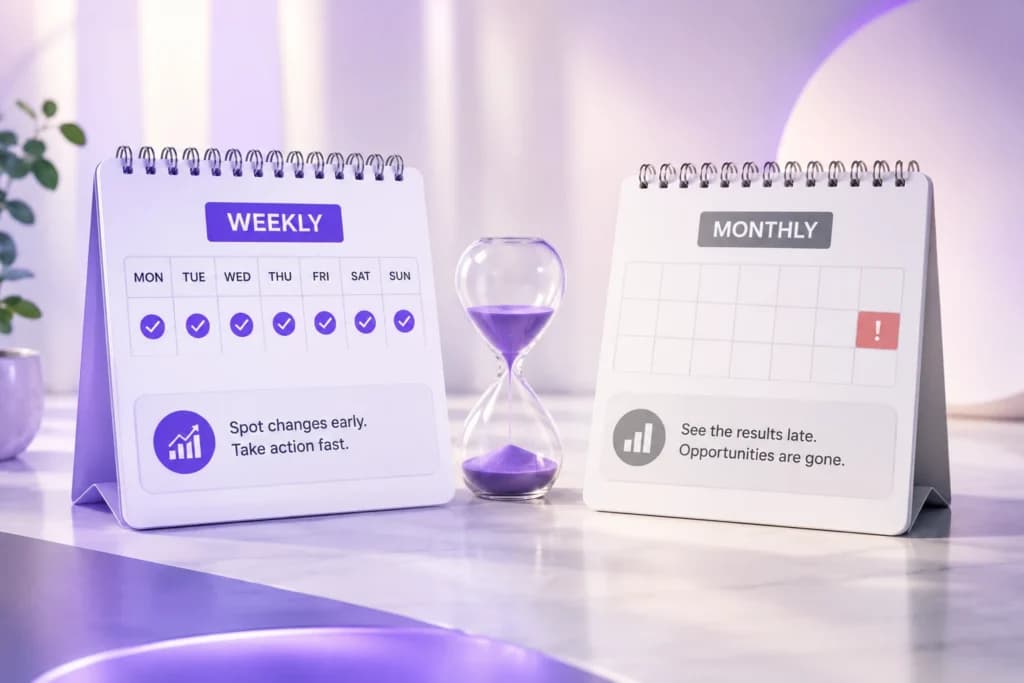
Say a stylist’s rebooking rate drops from 70% to 40%. On a monthly report, you’d notice this after four weeks of lost clients.
On a weekly report, you catch it after week one and can ask what changed before it becomes a pattern.
This is the real value of reporting software. It’s not about generating pretty charts. It’s about shrinking the time between “something’s wrong” and “we know something’s wrong.”
The 6 Reports That Actually Matter
Not every report deserves your attention. Here are the six that tell you the most, in the order most owners should check them.
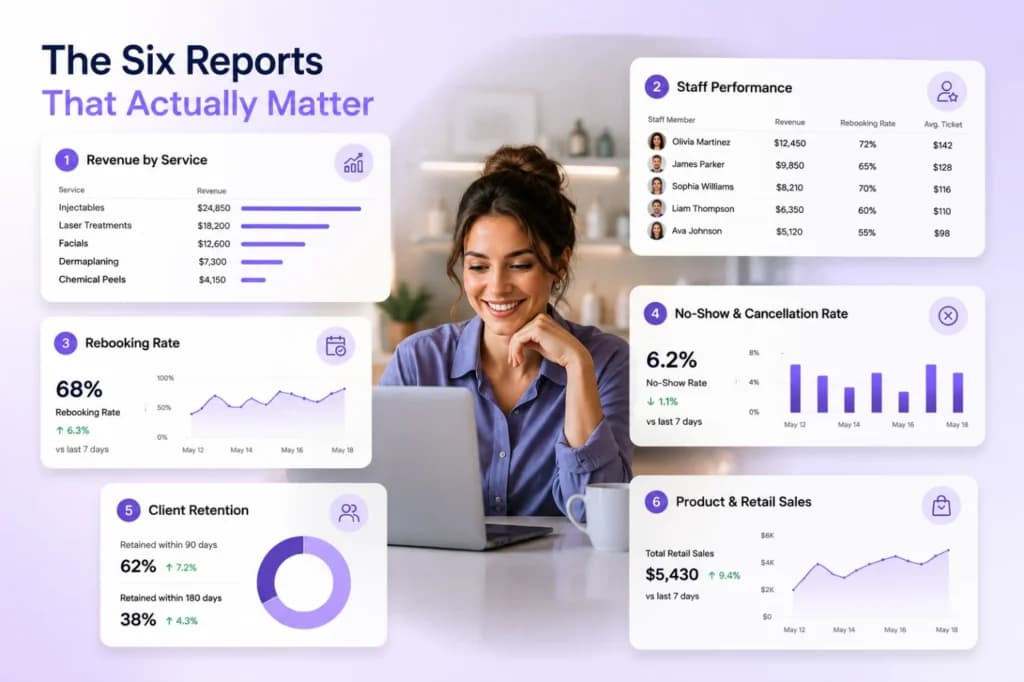
1. Revenue by service
Shows which services bring in the most money and which ones are quietly losing you money once you account for time and product cost.
A 90-minute facial that books at $80 might be worth less per hour than a 30-minute brow service at $35.
2. Staff performance
Tracks revenue, rebooking rate, and average ticket size per staff member.
This is the fastest way to spot who needs coaching and who deserves a raise, without relying on gut feeling.
3. Rebooking rate
The percentage of clients who book their next appointment before leaving. This one number predicts your future revenue better than almost anything else on your books.
4. No-show and cancellation rate
Every no-show is a chair that sat empty and could have been filled.
Tracking this by day, time slot, and even by staff member shows you exactly where you’re losing revenue to empty chairs.
5. Client retention
How many first-time clients come back for a second visit, and how many regulars haven’t been in for 60 or 90 days. New client marketing is expensive.
Keeping clients you already have is nearly free.
6. Product and retail sales
Retail is often the most neglected report, and often the most profitable.
A salon that sells $500 a week in product on top of services is running a different business than one that doesn’t.
How PandaCue’s Reporting Works Day to Day
PandaCue pulls these numbers automatically from every booking, checkout, and staff schedule in the system, so nobody has to build a spreadsheet by hand.

Reports update in real time, which means the number you see at 2 PM reflects the client who just checked out at 1:58.
Owners running more than one location can view each location separately or roll everything into one combined dashboard.
This matters most for spotting which location is actually driving growth and which one needs attention, instead of averaging performance across locations and missing the real story.
Setting Up Reports That Fit Your Business
Getting useful reports out of any system takes a few decisions up front.
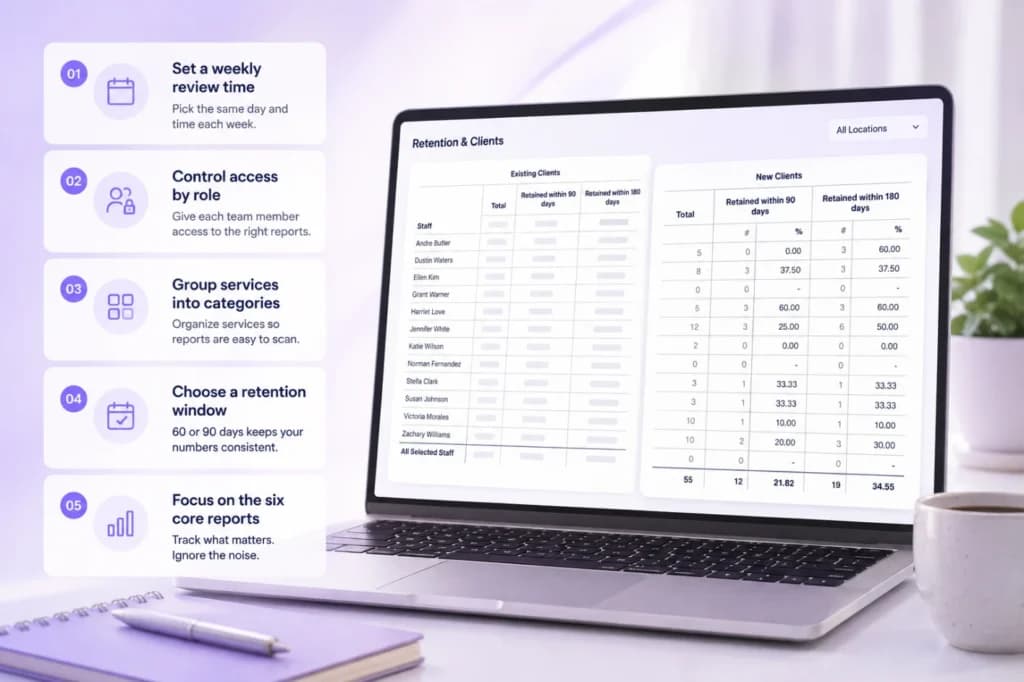
- Set a weekly time to review the six core reports, ideally the same day and time every week
- Decide which reports each role can see, so staff aren’t overwhelmed with numbers that aren’t theirs to act on
- Group services into categories (hair, skin, injectables, body) so revenue by service is easier to scan
- Pick a retention window, usually 60 or 90 days, and stick with it so the numbers stay comparable month to month
FAQs
How often should a salon or spa owner check reports?
Weekly, at minimum. Revenue and staff performance reports are worth a quick daily glance, but a full weekly review is enough to catch most problems early.
What’s a good rebooking rate for a salon or spa?
Most healthy salons and spas land between 60% and 75%. Below 50% usually means staff aren’t consistently asking clients to book their next visit before checkout.
Why does my revenue report look different from my bank deposits?
Revenue reports usually reflect the day a service was rendered, while bank deposits reflect when the payment actually settles. These rarely match day to day, and that’s normal.
Can front desk staff see the same reports as the owner?
It depends on the permissions set up in your software. PandaCue lets owners control exactly which reports each role can view.
What’s the difference between retention and rebooking?
Rebooking measures whether a client books their next visit before leaving. Retention measures whether they actually come back within a set window, whether or not they pre-booked.
Do I need separate reports for each location?
Yes, alongside a combined view. Location-level reports show you what’s actually happening on the ground; a combined report can hide a struggling location behind a strong one.