


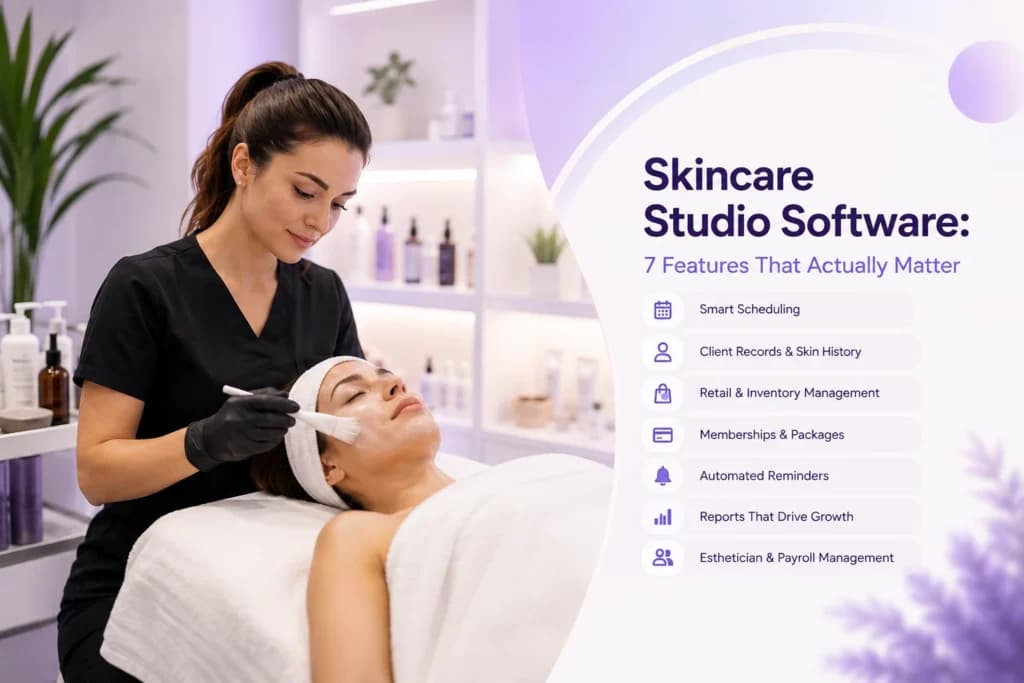
Think about what actually happens in a skincare studio on a normal day. A client books a 60-minute facial. Before you touch their skin, you need to know what they used last time, whether they’re on a retinol, and if their skin reacted to anything.
After the treatment, you’re recommending products, maybe scheduling their next visit in four weeks, and possibly enrolling them in a monthly facial membership.
None of that is a one-off transaction. It’s a relationship that plays out over months, sometimes years.
A basic booking calendar can schedule the appointment, but it can’t tell your esthetician what happened three visits ago or flag that a client is due for their quarterly peel.
That’s the real difference. Hair salons largely deal with single-visit services. Med spas deal with heavier compliance and injectable tracking.
Skincare studios sit in the middle: enough medical-adjacent detail to need real client records, but enough retail and membership activity to need strong point-of-sale and recurring billing too.
The Workflows Your Software Actually Needs to Handle
A skincare studio’s day-to-day isn’t complicated to describe, but it does touch a lot of moving parts. Here’s what matters most.
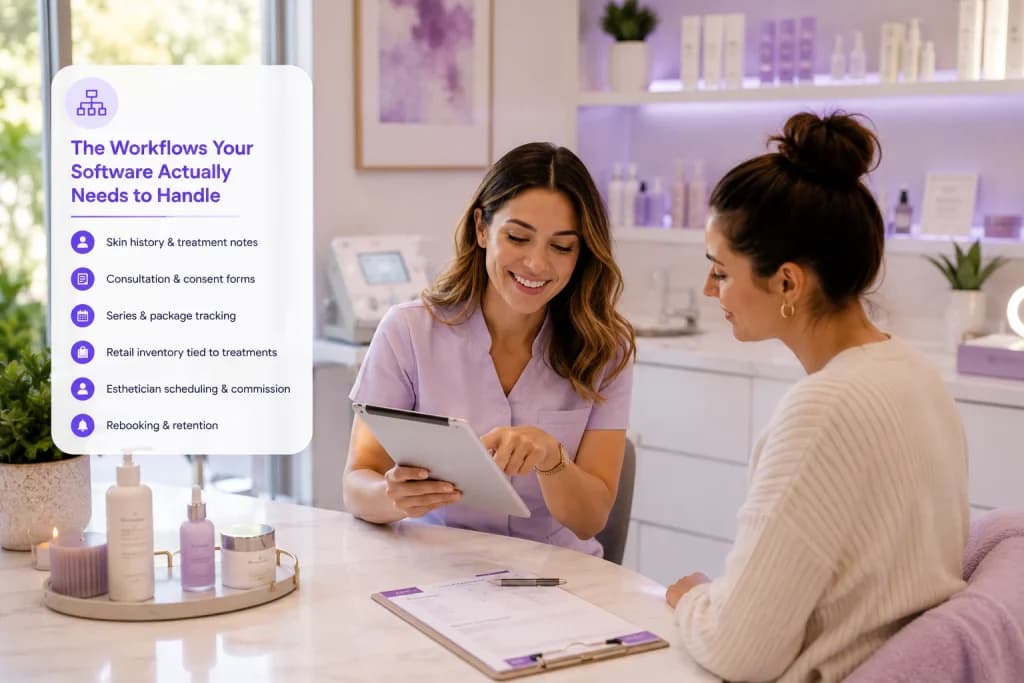
Skin history and treatment notes
Every visit should build on the last one. Your esthetician needs to see previous treatments, product reactions, and any contraindications before the client sits down, not after.
Consultation and consent forms
New clients typically fill out a skin type questionnaire and consent forms before their first facial or peel. These need to be digital, easy to fill out on a phone, and stored with the client’s file automatically.
Series and package tracking
A lot of skincare revenue comes from packages: six dermaplaning sessions, a quarterly peel series, a monthly LED add-on. Someone needs to track how many sessions are left without a spreadsheet.
Retail inventory tied to treatments
When you recommend a cleanser during a facial, that sale should ring up at the front desk in seconds and pull from the same inventory count as your shelf stock.
Esthetician scheduling and commission
Estheticians often work partial weeks or split shifts across skincare and body treatments. Your scheduling needs to reflect real availability, and commission tracking needs to account for both services and product sales.
Rebooking and retention
Skincare results depend on consistency. A client who skips their maintenance facial for three months often doesn’t come back at all. Automatic rebooking reminders matter more here than in almost any other service business.
How PandaCue Supports a Skincare Studio’s Actual Workflow
PandaCue was built to handle service businesses where the relationship spans multiple visits, not just a single appointment. For a skincare studio, that shows up in a few specific ways.
Client records in PandaCue keep skin consultation notes, past treatments, and product recommendations attached to each client’s profile, so an esthetician can pull up the full history in seconds before a client sits in the chair.
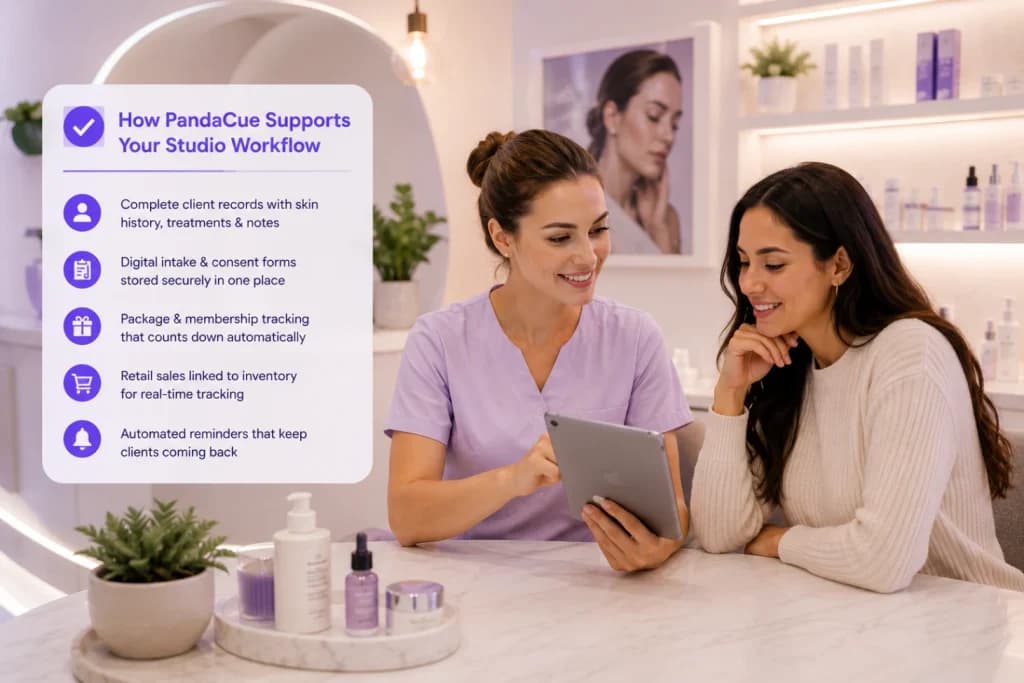
Digital intake forms collect skin type, allergies, and consent electronically, and they sync straight to the client’s file instead of living in a filing cabinet.
Package and membership tracking counts down sessions automatically. If a client bought a six-visit peel series, the system tracks how many they’ve used without anyone doing math by hand.
Retail products can be sold at checkout and linked to inventory counts, so a $40 serum sale doesn’t require a separate system from the $150 facial that came before it.
Setting Up a Skincare Studio Correctly From Day One

Build your service menu around actual treatment time, not round numbers. A dermaplaning add-on might take 15 minutes, but if you block 30, you’re losing bookable hours every single day. Time services accurately from the start.
Create digital intake forms before you open, not after your first client complains about paperwork. Include skin type, current products, allergies, and recent procedures like microneedling or chemical peels elsewhere.
Set up package and membership options with clear expiration and renewal rules. Decide upfront whether unused sessions roll over or expire, and make sure your software enforces whatever you choose.
Tag retail products to the treatments that typically pair with them. This makes it faster for front desk staff to suggest the right add-on sale without guessing.
Set rebooking reminders based on typical treatment intervals, not a generic 30-day rule. A chemical peel series might need reminders every three weeks, while a monthly hydrafacial client needs a different cadence.
Where Skincare Studios Lose Revenue Without the Right Setup
A few patterns show up again and again in studios still running on paper or disconnected tools.
Clients fall through the cracks between package sessions because nobody’s tracking how many visits are left, so packages expire unused and clients quietly stop coming.

Retail sales get missed because product recommendations live in an esthetician’s memory instead of a system that prompts the front desk at checkout.
Rebooking happens too late, after a client’s skin has already regressed, instead of on a schedule tied to the actual treatment plan.
The fix isn’t more effort from your staff. It’s removing the manual tracking that causes these gaps in the first place.
FAQs
Does a skincare studio need HIPAA-level compliance software?
Not usually. Skincare studios that don’t perform medical procedures typically don’t fall under HIPAA the way med spas do, but you still need secure storage for client health notes and signed consent forms.
How is skincare studio software different from salon software?
Salon software is usually built around single-visit services. Skincare studio software needs to track ongoing treatment plans, skin history, and retail sales as part of the same client relationship.
Can one system handle both booking and retail sales?
Yes, and it should. Keeping appointments and product sales in the same system means inventory counts stay accurate and you’re not reconciling two sets of records.
What’s the best way to track treatment packages?
Look for software that automatically counts down sessions as they’re used and flags clients when they’re close to running out, so renewal conversations happen before the package expires.
Do I need separate software for memberships versus one-off appointments?
No. Your booking system should support both single appointments and recurring memberships without requiring a second tool.
How much does software like this typically cost for a small studio?
Pricing varies by provider and studio size. PandaCue offers plans built for solo estheticians up through multi-location studios, so it’s worth requesting a quote based on your actual client volume rather than assuming a flat rate.
The Bottom Line
A skincare studio isn’t a smaller version of a med spa or a haircare-focused salon. It runs on repeat visits, evolving treatment plans, and retail sales woven into every appointment.
Software that treats each visit as a standalone transaction will always feel like it’s fighting your actual business model.
The goal is a system that remembers what happened at the last visit, knows what’s coming next, and makes the retail side of the business as easy to manage as the bookings.