



A full-day tattoo sitting and a fifteen-minute lobe piercing don’t belong on the same kind of calendar entry. One needs hours blocked with buffer time before and after.
The other needs to slot into a walk-in queue without throwing off the rest of the day.
PandaCue’s scheduling tools let you set different time blocks per service and per artist, so a custom sleeve doesn’t get scheduled like a quick piercing.
Each artist keeps their own calendar, and clients booking online only see real, current openings not a slot that got taken five minutes ago.
For custom work, most shops don’t book a session without a deposit locked in.
Online booking can require payment at the time of scheduling, which cuts down on the no-shows that hurt more when three hours of an artist’s day were reserved for one client.
Collecting Consent, ID, and Health History Before Anyone Touches a Client
Every tattoo and piercing needs signed consent. Every piercing on a minor needs a guardian’s signature and often ID verification.
Health history allergies, skin conditions, medications that thin blood has to be on file before the artist starts, not filled out from memory afterward.
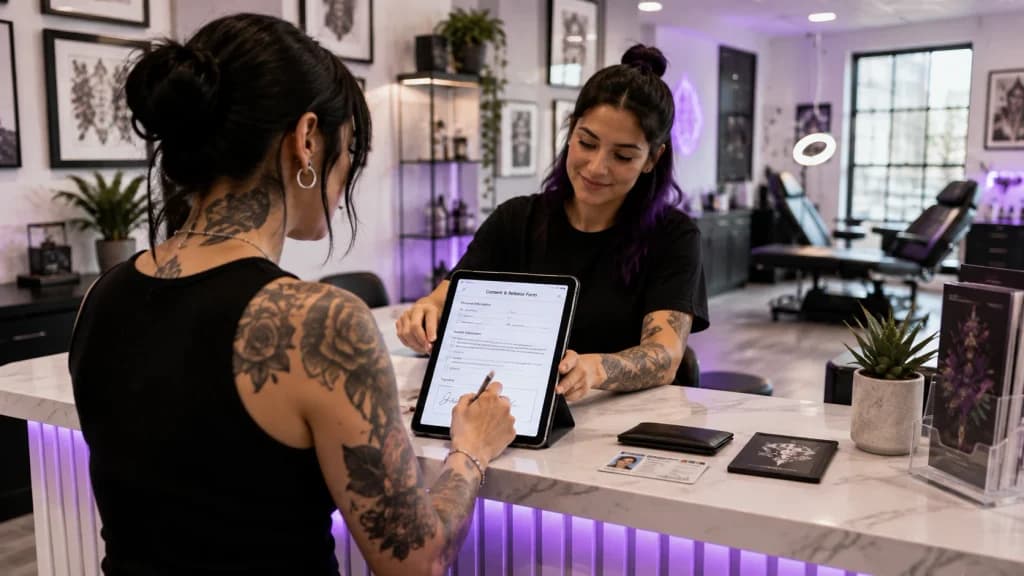
Paper forms get lost. They also don’t stop an artist from starting work before the form is actually signed.
PandaCue’s digital forms require the client to complete and sign before their appointment shows as ready, so there’s no gap where someone gets tattooed without paperwork on file.
Keeping a Real Record on Every Client, Not Just an Appointment History
PandaCue’s client management profiles keep that history in one place.

An artist opening a returning client’s file before a touch-up can see the original design notes instead of guessing or asking the client to explain it again.
This matters more in shops with several artists. A client who saw one piercer for their first piercing and books with someone else for a second one shouldn’t have to repeat their whole history.
The record travels with the client, not just with the artist who wrote it down.
Handling Deposits, Tips, and Split Payments Without a Mess
There’s a deposit at booking, a balance due at the session, a tip that may or may not go through the same system, and sometimes a client splitting the cost of jewelry separately from the piercing fee.
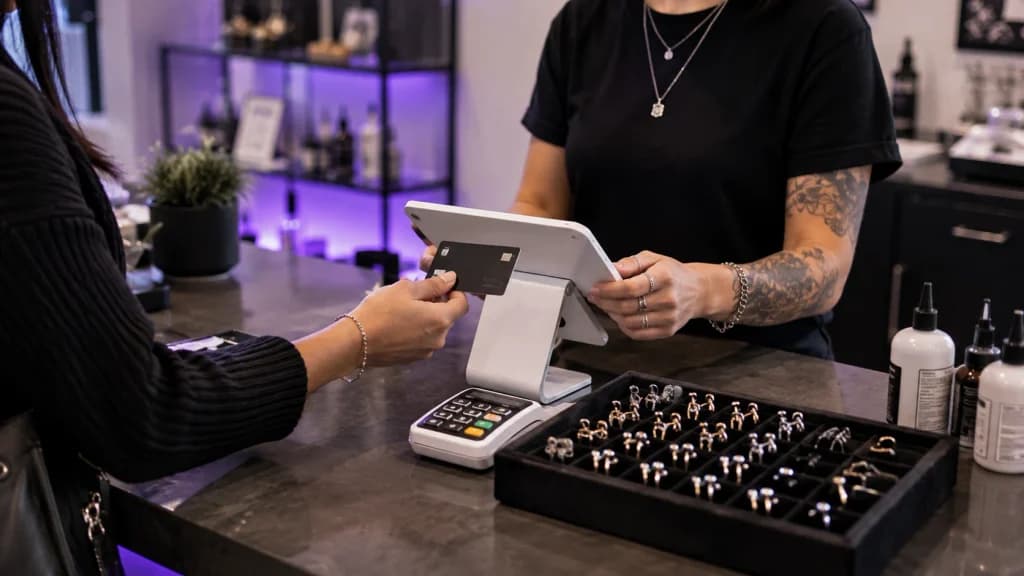
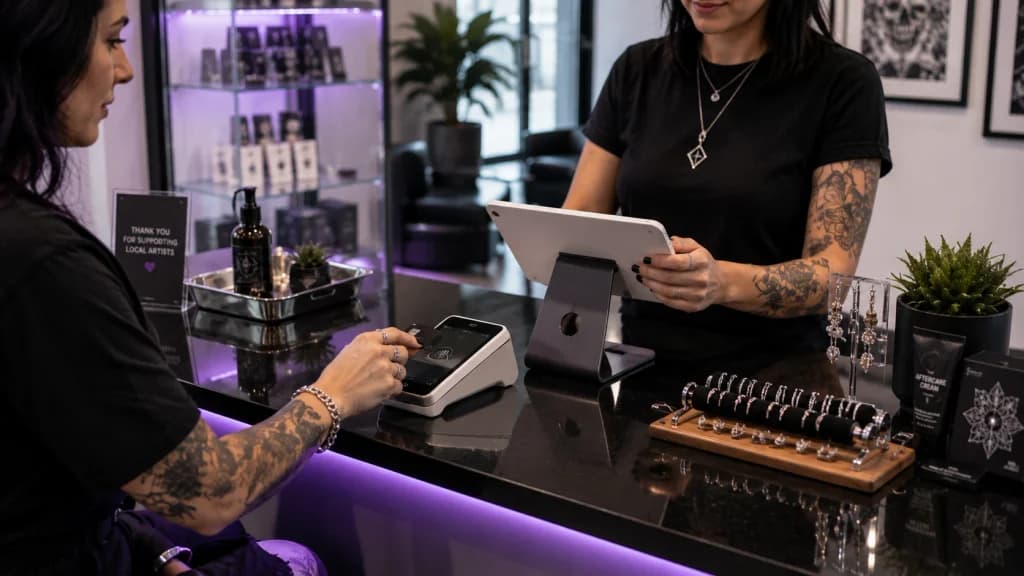
PandaCue’s payments and POS tools handle deposits, balances, and tips in the same flow, so front desk staff aren’t reconciling three different totals by hand at closing.
Retail items jewelry, aftercare products, merch ring up through the same system as the service, which keeps one register instead of a side cash box nobody tracks well.
Paying Commission Artists and Booth Renters the Right Amount, On Time
Most studios don’t pay every artist the same way. Some are on commission that varies by service type.
Some rent a booth and owe the shop a flat fee regardless of what they earn that week. Getting this wrong, even by a little, is the fastest way to lose a good artist’s trust.
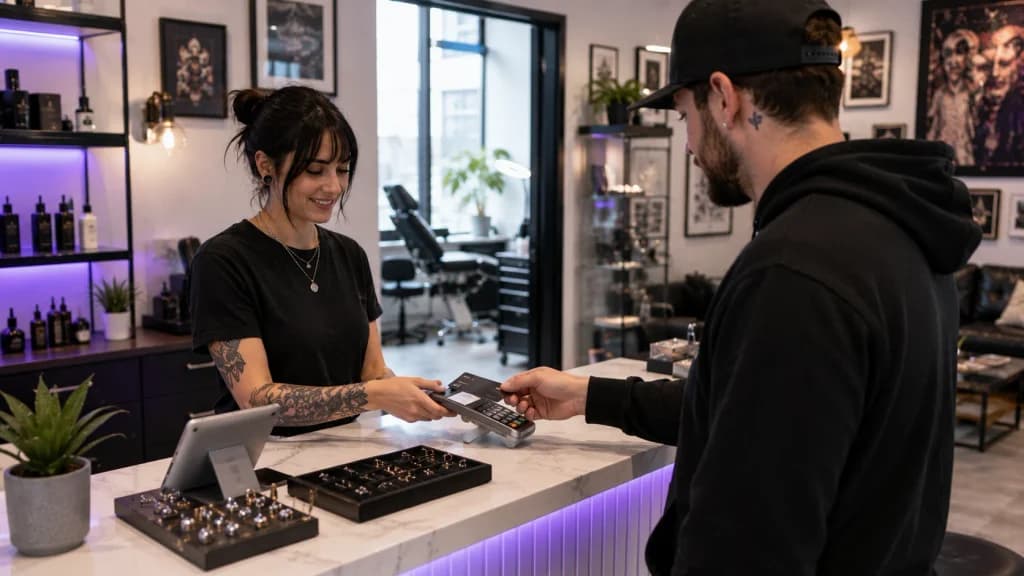
Staff management in PandaCue tracks commission rates per artist and per service, so a piercer earning a different split than a tattoo artist doesn’t need a separate spreadsheet.
Payroll pulls straight from completed appointments and sales, which means payday numbers match what actually happened on the floor not what someone remembers happening.
Watching Ink, Needle, and Jewelry Stock So You’re Never Short Mid-Session
Running out of a specific ink color or the right gauge jewelry mid-appointment is more than an inconvenience.
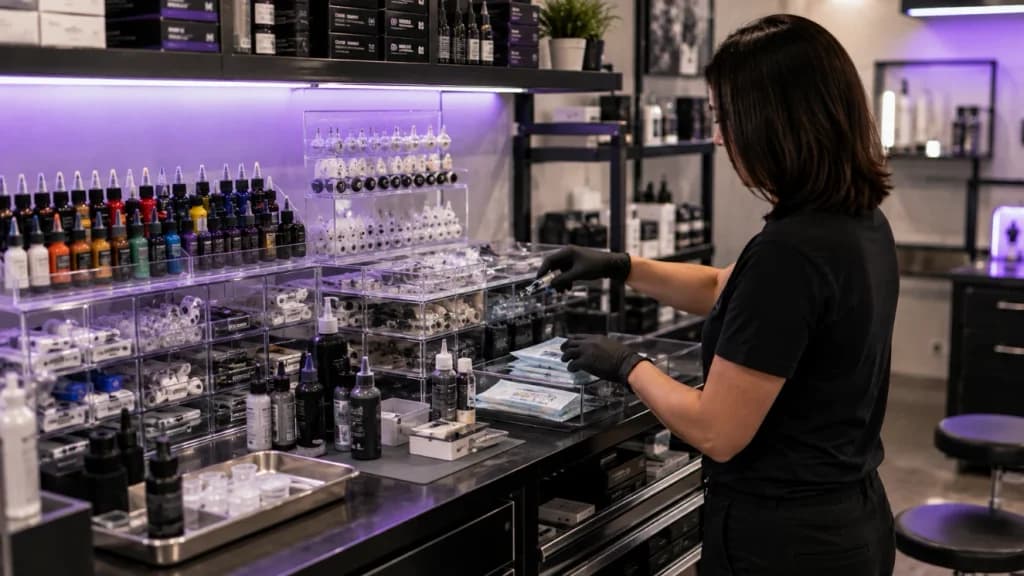
It can mean rescheduling a client who blocked off their whole afternoon, or an artist improvising with a substitute that isn’t what was agreed on.
PandaCue’s inventory tracking lets you set reorder points on the consumables you actually run low on specific ink colors, needle cartridges, jewelry by size and material.
Health inspectors in many states also expect studios to show what supplies were used and when, so having a running record helps beyond just restocking.
Getting Clients Back for Touch-Ups, Healed Checks, and Their Next Piece
Say a studio finishes a large piece and tells the client to come back in six weeks for touch-ups on the healed skin.

Without a system tracking that date, it depends on the client remembering or the artist writing themselves a note that gets buried.
With automated flows set up around appointment type, a reminder can go out automatically at the right interval no one has to remember to send it, and the client doesn’t fall through the gap between “healed” and “forgotten.”
Running More Than One Location Without Losing Control
Studios that grow past one shop run into a specific problem: artist schedules, inventory, and commission structures that made sense at one location start conflicting across two or three.
A jewelry reorder point that worked for a single shop doesn’t work when three locations are pulling from the same supplier at different rates.
Multi-location management keeps scheduling, inventory, and reporting separated by shop while still giving owners one view across all of them.
That means checking performance across locations without logging into three different systems or asking three different managers for numbers.
FAQs
Do minors need a different consent process for piercings?
Yes, in most states. A guardian typically needs to sign and often show ID confirming the relationship. PandaCue’s digital forms can require guardian information and signature specifically for underage clients, so the requirement isn’t left to staff to remember case by case.
Can I track commission artists and booth renters in the same system?
Yes. Staff management lets you set different payout structures per artist, whether that’s a percentage commission, a flat booth rental fee, or a mix of both, without maintaining separate records for each type.
How do I cut down on no-shows for tattoo appointments?
Requiring a deposit at booking is the most reliable fix. PandaCue’s online booking can collect a deposit automatically, and automated reminders leading up to the appointment reduce the rest.
Can I track ink and jewelry the same way I’d track retail products?
Yes. Inventory tracking works for consumables used during a service, not just items sold at the counter, and can flag low stock on specific colors, sizes, or materials before you run out.
Do I need separate tools for scheduling, payments, and payroll?
No. Those pieces are connected in PandaCue, so a completed appointment flows into the payment record and then into the artist’s payroll and commission calculation without manual re-entry.
What should I look for regarding health department compliance?
Requirements vary by state, but most expect records of consent, aftercare instructions given, and traceable supply use. Keeping consent forms, aftercare delivery, and inventory logs in one system makes those records easy to produce if you’re ever asked for them.
Where This Leaves You
A tattoo or piercing studio has more moving parts than most service businesses realize until they’re managing all of them by hand sessions of wildly different lengths.
That has to happen before work starts, artists paid in different ways, and consumables that run out at the worst possible time.
None of that needs five separate tools. It needs one system built to handle the parts that make body art different from a haircut, which is exactly what PandaCue was built around.